

Hard-to-Fit Contact Lenses: Overcoming Astigmatism and Dry Eye

Hard-to-Fit Contact Lenses: Overcoming Astigmatism and Dry Eye
Contact lenses should provide clear, comfortable vision, but standard lenses do not work well for everyone. Astigmatism and dry eye can make lenses feel unstable, irritating, or difficult to wear for extended periods. Fortunately, hard-to-fit contact lenses provide customized options for patients who have struggled with traditional contacts.
Why Some Eyes Are More Difficult to Fit With Contact Lenses
A successful contact lens fitting depends on the shape of the cornea, the stability of the tear film, the prescription, and the overall health of the eyes. When one or more of these factors creates a challenge, standard soft contacts may not provide consistent comfort or vision.
You may benefit from hard-to-fit contact lenses if you experience:
• Blurry or fluctuating vision while wearing contacts
• Lenses that rotate, shift, or frequently move out of place
• Burning, dryness, redness, or a gritty sensation
• Discomfort that causes you to remove your lenses early
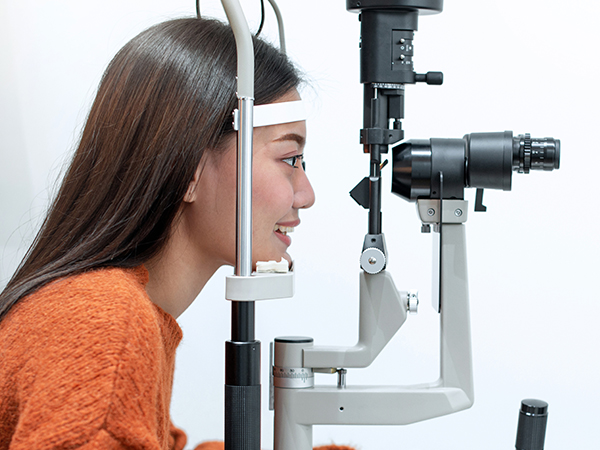
A specialized contact lens exam allows our eye doctors to evaluate these concerns and recommend a lens based on your individual eyes.
Contact Lenses for Astigmatism
Astigmatism occurs when the cornea or lens inside the eye has an uneven curvature. Instead of focusing light evenly, the eye creates multiple focal points, which can cause blurred or distorted vision at different distances.
Traditional spherical contacts may rotate or fail to correct the full prescription. Toric contact lenses are designed specifically for astigmatism. Their shape and stabilization features help the lens remain correctly positioned throughout the day.
For patients with more complex or severe astigmatism, rigid gas permeable lenses may offer sharper and more stable vision. These lenses maintain their shape on the eye, creating a smooth optical surface that can compensate for irregularities in the cornea.
Managing Dry Eye Before Contact Lens Wear
Dry eye develops when the eyes do not produce enough tears or when tears evaporate too quickly. Contact lenses may worsen symptoms by disrupting the tear film and reducing moisture on the eye’s surface.
Common dry eye symptoms include burning, irritation, redness, blurred vision, and the feeling that something is stuck in the eye. Treating the underlying dryness is often an important first step before selecting new contacts.
Our eye doctor may recommend changes to your lens material, cleaning solution, replacement schedule, or daily wearing time. Some patients benefit from frequently replaced soft lenses, while others experience better comfort with gas permeable lenses that do not absorb moisture in the same way as traditional soft contacts.
The Importance of a Personalized Contact Lens Fitting
Hard-to-fit contact lenses require more precise measurements than standard contacts. During the fitting process, our eye doctor evaluates your prescription, corneal shape, tear film, and how each lens moves with every blink.
Follow-up visits are also important. Small adjustments to the lens design, fit, or wearing schedule can make a significant difference in comfort and visual clarity. Patients who were previously told they could not wear contacts may discover that a customized option allows them to enjoy reliable vision without depending entirely on glasses.
Schedule a contact lens exam and fitting with Bandon & Coquille Vision Center and Eye Center of Gold Beach to find a specialty lens option that delivers clearer vision and lasting comfort. Contact Coquille Vision Center at (541) 396-4042, Bandon Vision Center at (541) 347-3622, or Eye Center of Gold Beach at (541) 247-7212 to book an appointment.
All Eye
Care Services

Request
an Appointment
© 2026 Coos Eye Centers. All rights Reserved. Accessibility Statement - Privacy Policy - Sitemap
Powered by:
